


Homr
Role: Lead Product Designer
Product Strategy, User Research, Interaction, Visual Design, Prototyping & Testing,
Timeline: Jun 2021- Jan 2022
Overview
Homr is an AR-ready, blockchain-powered social commerce platform focused on NFTs, enabling artists to create, showcase, and sell digital assets through its native ecosystem. It empowers creators worldwide to transform digital content into verifiable crypto collections, redefining ownership in the digital economy.
Homr was the Best Experience
Led a cross-functional team of a business analyst, four engineers, and two blockchain experts to deliver the end-to-end product design and UX/UI experience.
Applied design sprints to define problems, ideate solutions, prototype, and drive implementation. Partnered closely with engineering to ensure rapid, high-quality execution, resulting in efficient delivery and strong team alignment.
What is NFT?
NFTs (non-fungible tokens) are unique digital assets that cannot be exchanged on a one-to-one basis like traditional currencies or cryptocurrencies such as Bitcoin.
They function as a verifiable certificate of ownership, proving authenticity and ownership of a specific digital or physical asset. Common examples include digital art and collectibles, as well as tokenized physical assets like real estate.
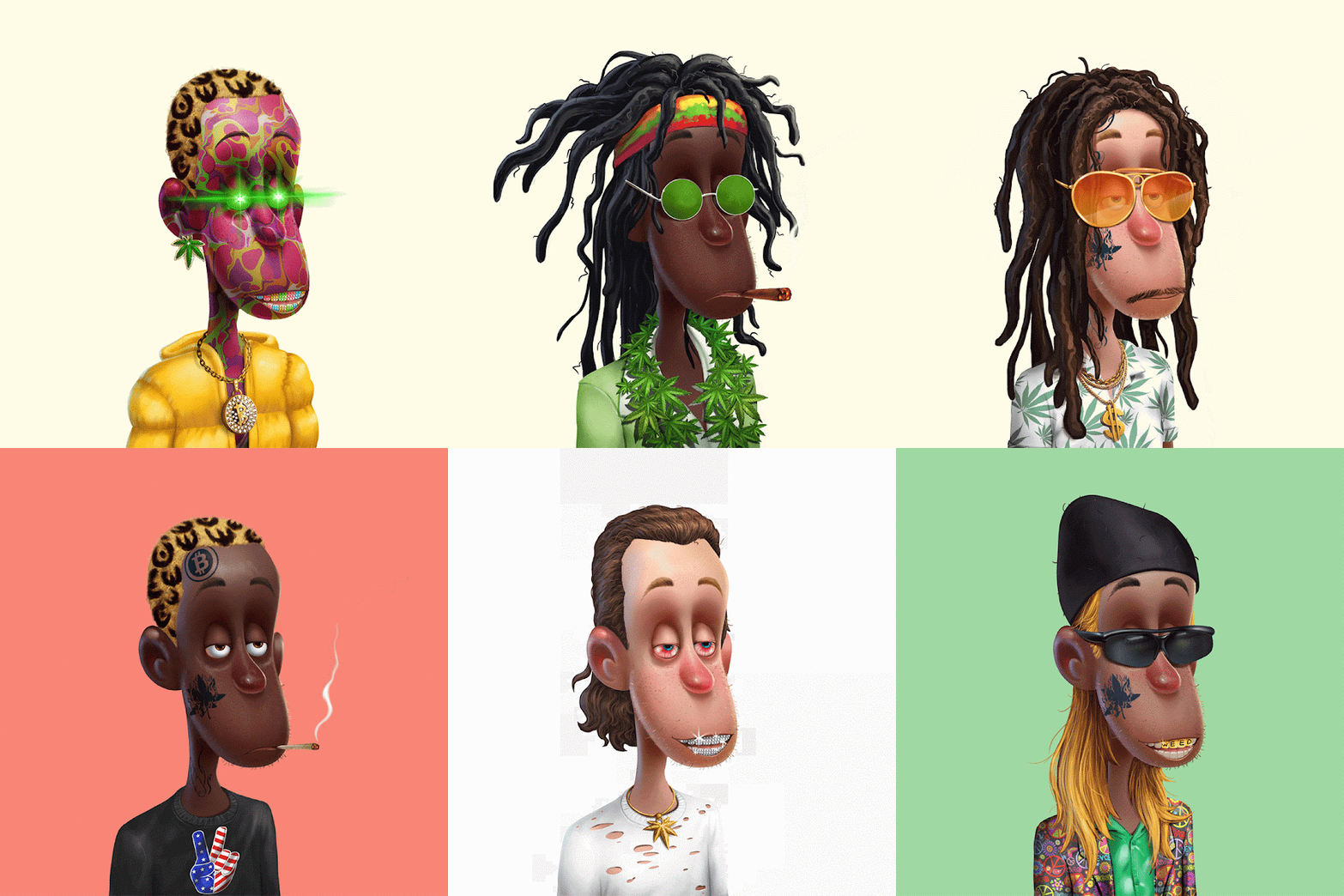
How to make an NFT
-
Select Your Asset: Choose a digital item such as artwork, music, video, GIF, or even a tweet.
-
Choose a Blockchain: Ethereum is the most widely used, with alternatives like Tezos, Polkadot, Cosmos, and Binance Smart Chain.
-
Set Up a Digital Wallet: Create a wallet to manage your assets (e.g., MetaMask, Trust Wallet, Coinbase Wallet) and fund it with cryptocurrency.
-
Pick a Marketplace: Select a platform to list your NFT, such as OpenSea, Rarible, SuperRare, or Foundation.
-
Mint Your NFT: Upload your file to the marketplace to convert it into a tradable NFT.
Understanding the problem
Most NFTs have traditionally been created on the Ethereum blockchain, where transaction fees can be high due to miner costs. While decentralized, this model introduces scalability and cost challenges. Additionally, Proof-of-Work systems are energy-intensive, raising long-term sustainability concerns.
Emerging alternatives, such as HomBit, leverage Proof-of-Stake technology to enable faster, low-cost transactions with significantly reduced energy consumption.
Beyond infrastructure, most NFT marketplaces primarily serve artists and collectors, offering limited accessibility for users who want to easily create and participate in digital art.
UX Research


Persona


Competitive Analysis
To kick off the project, we conducted competitive research to analyze existing solutions and identify key opportunities.
I then facilitated a rapid sketching session, where each team member visualized their approach to the solution.

Product vision and solution
Based on these insights, we defined key business goals:
-
Simplify how users navigate and interact with the NFT marketplace
-
Enable seamless creation, storage, and trading of NFTs
-
Support in-platform minting to reduce reliance on external tools
-
Empower users to create and sell custom artwork by combining pre-minted assets from multiple creators
Design Startegy
Target Audience
General Tasks
Cross Channels:
Project Duration
Business Type
Creators; artists and non-artists and Collectors
Age group: 10+
Gender: Male, Female, Transgender
• A digital platform for buying and selling NFTs
• Allows people to store and display their NFTs plus sell them to others for cryptocurrency or money
• NFT marketplaces also allow users to mint their NFTs on the platform itself.
• iOS, Web
36 weeks
30+ screens
B2C – Business to Customer
It is an online NFT marketplace application where Homr makes and provides services related to NFT to their customers
Defining the MVP
Insights from the sketching sessions revealed common product themes, which informed key user stories:
-
Users can mint their artwork as NFTs
-
Collectors can bid on and purchase digital assets
-
Creators can remix or build new artwork using layered assets from other artists
To support engineering and define the MVP, I translated these concepts into core flows and designed the primary screens:
-
Wallet setup
-
Profile registration
-
Art discovery
-
Digital art creation